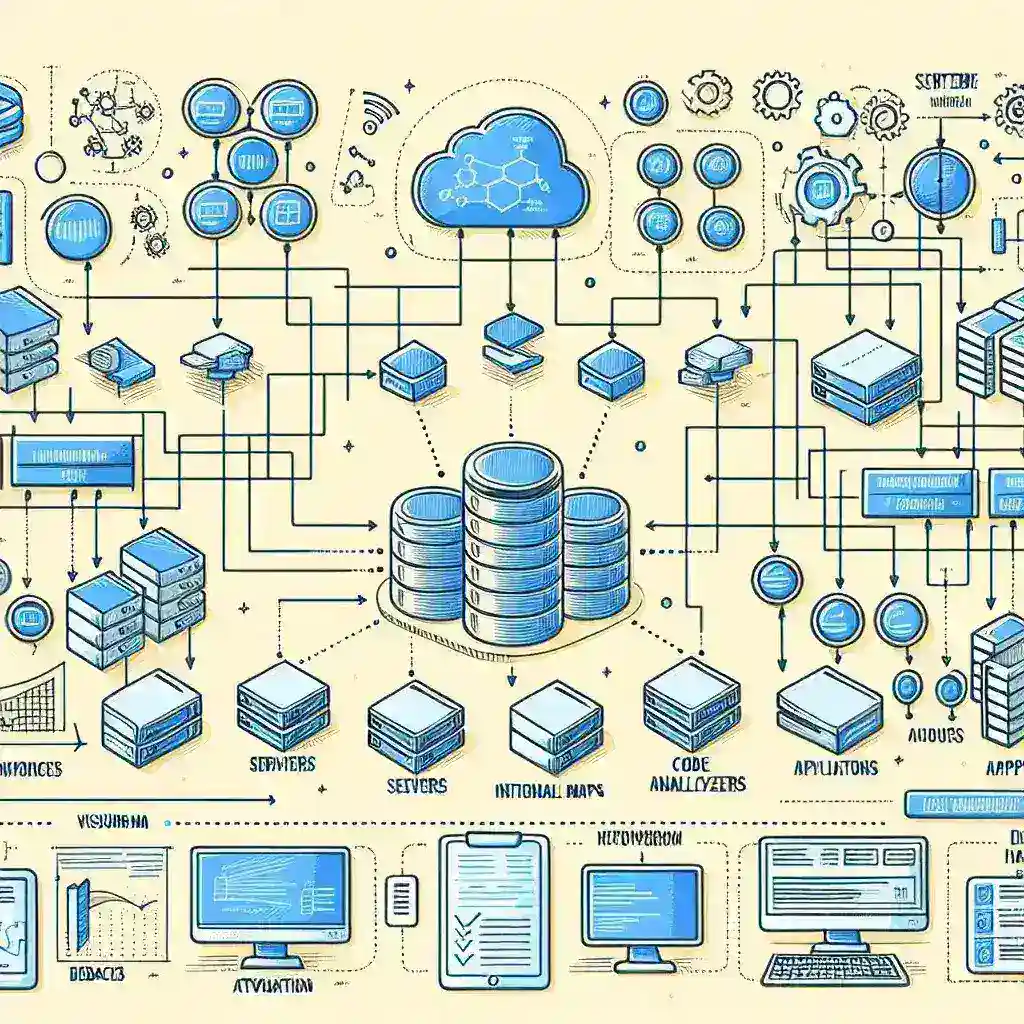
In today’s interconnected digital landscape, understanding the intricate web of dependencies within your organization’s systems has become a critical necessity. As businesses rely increasingly on complex IT infrastructures, the ability to map and visualize these relationships can mean the difference between seamless operations and catastrophic failures. This comprehensive exploration delves into the essential tools and methodologies that modern organizations employ to navigate the labyrinth of internal system dependencies.
Understanding the Critical Nature of System Dependencies
System dependencies represent the foundational relationships that bind different components of an IT infrastructure together. These connections can range from simple database queries to complex microservice interactions, each carrying the potential to impact overall system performance. The challenge lies not merely in identifying these relationships but in comprehensively mapping them to create actionable insights.
Consider a scenario where a seemingly minor update to a legacy authentication service triggers a cascade of failures across multiple applications. Without proper dependency mapping, IT teams often find themselves playing detective, scrambling to identify the root cause while critical business operations grind to a halt. This reactive approach not only costs organizations valuable time and resources but can also damage customer trust and revenue streams.
The Evolution of Dependency Mapping Solutions
The landscape of dependency mapping tools has evolved dramatically over the past decade. Early solutions focused primarily on network topology discovery, providing basic visualizations of hardware connections. However, modern challenges demand more sophisticated approaches that can capture the nuanced relationships between software components, data flows, and service interactions.
Contemporary tools leverage advanced technologies such as machine learning algorithms, real-time monitoring capabilities, and automated discovery mechanisms to provide comprehensive visibility into system architectures. These solutions have transformed dependency mapping from a manual, time-intensive process into an automated, continuous practice that adapts to changing environments.
Categories of Dependency Mapping Tools
Network Discovery and Visualization Platforms
Network-focused tools form the foundation of dependency mapping by identifying physical and logical connections between infrastructure components. SolarWinds Network Topology Mapper stands out in this category, offering automated network discovery capabilities that can map Layer 2 and Layer 3 network devices. The tool excels at creating visual representations of network architectures, making it easier for teams to understand connectivity patterns and identify potential bottlenecks.
Similarly, ManageEngine OpManager provides comprehensive network mapping functionality with real-time monitoring capabilities. Its strength lies in combining topology discovery with performance metrics, enabling teams to correlate network issues with dependency relationships. The platform’s ability to automatically update maps as network changes occur ensures that dependency information remains current and accurate.
Application Performance Monitoring Solutions
Application-centric tools focus on understanding dependencies at the software level, tracking interactions between different services and components. Dynatrace represents the pinnacle of this category, utilizing artificial intelligence to automatically discover and map application dependencies. Its AI-powered approach can identify even the most subtle relationships between services, providing insights that manual mapping processes might miss.
New Relic offers another compelling solution in this space, particularly strong in microservices environments. The platform’s distributed tracing capabilities allow teams to follow request paths across multiple services, revealing dependency chains that might not be apparent through traditional monitoring approaches. This visibility proves invaluable when optimizing application performance or troubleshooting complex issues.
Infrastructure as Code and Configuration Management Tools
Modern infrastructure practices have given rise to tools that can map dependencies based on configuration files and infrastructure definitions. Terraform, while primarily known as an infrastructure provisioning tool, generates dependency graphs that visualize resource relationships. These graphs provide valuable insights into how infrastructure components depend on each other, enabling teams to understand the impact of changes before implementation.
Ansible complements this approach through its inventory and playbook analysis capabilities. By examining automation scripts and configuration files, teams can identify dependencies that exist at the configuration level, ensuring that changes are applied in the correct order and with full awareness of their potential impact.
Advanced Analytics and Visualization Platforms
Graph Database Solutions
Graph databases have emerged as powerful platforms for storing and analyzing dependency relationships. Neo4j leads this category, offering sophisticated graph analytics capabilities that can reveal complex dependency patterns. Its query language, Cypher, enables teams to ask sophisticated questions about system relationships, such as identifying all components that could be affected by a specific service failure.
The platform’s visualization capabilities transform abstract dependency data into intuitive graphical representations, making it easier for stakeholders across different technical levels to understand system relationships. This democratization of dependency information proves crucial for effective decision-making and risk assessment.
Custom Visualization and Analysis Tools
Graphviz provides a flexible foundation for creating custom dependency visualizations. While it requires more technical expertise to implement effectively, its programmatic approach allows organizations to tailor visualizations to their specific needs and integrate dependency mapping into existing workflows.
For organizations seeking more interactive capabilities, D3.js offers unlimited flexibility in creating web-based dependency visualizations. This JavaScript library enables the development of dynamic, interactive maps that can be embedded into dashboards and operational tools, providing real-time visibility into system relationships.
Implementation Strategies and Best Practices
Automated Discovery Approaches
Successful dependency mapping initiatives typically begin with automated discovery processes that minimize manual effort while maximizing coverage. Modern tools employ various techniques including network scanning, log analysis, and API monitoring to identify relationships automatically. The key lies in configuring these tools to balance comprehensiveness with accuracy, avoiding both missed dependencies and false positives.
Organizations should establish baseline mappings during stable operational periods, then implement continuous monitoring to detect changes and new dependencies as they emerge. This proactive approach ensures that dependency maps remain current and useful for operational decision-making.
Integration with Existing Workflows
The most effective dependency mapping implementations integrate seamlessly with existing operational workflows. This might involve connecting mapping tools with incident management systems to automatically highlight affected components during outages, or integrating with change management processes to assess impact before implementing modifications.
Teams should also consider how dependency information can enhance their monitoring and alerting strategies. By understanding component relationships, organizations can implement more intelligent alerting that focuses on root causes rather than symptoms, reducing noise and improving response times.
Measuring Success and Continuous Improvement
Key Performance Indicators
Successful dependency mapping initiatives require clear metrics to measure effectiveness and guide improvement efforts. Mean time to resolution (MTTR) for incidents often improves significantly when teams have access to comprehensive dependency maps, as they can quickly identify root causes and affected systems.
Change success rates represent another crucial metric, as understanding dependencies enables better impact assessment and risk mitigation during system modifications. Organizations typically see reduced rollback rates and fewer unplanned outages as their dependency mapping capabilities mature.
Evolution and Adaptation
The technology landscape continues evolving rapidly, with new architectural patterns like serverless computing and edge computing introducing novel dependency challenges. Successful organizations view dependency mapping as an evolving capability that must adapt to new technologies and changing business requirements.
Regular assessment of mapping tool effectiveness ensures that solutions remain aligned with organizational needs. This might involve evaluating new tools as they become available or adjusting existing configurations to capture emerging dependency patterns.
Future Trends and Considerations
The future of dependency mapping lies in increased automation and intelligence. Machine learning algorithms are becoming more sophisticated at identifying subtle relationships and predicting potential failure scenarios based on dependency patterns. Organizations should prepare for this evolution by establishing data collection practices that will support more advanced analytics capabilities.
Cloud-native architectures and containerized deployments are also reshaping dependency mapping requirements. Tools must evolve to handle the dynamic, ephemeral nature of modern infrastructure while maintaining accurate visibility into service relationships.
Conclusion
Effective dependency mapping has transformed from a nice-to-have capability into a business-critical necessity. The tools and strategies outlined in this guide provide organizations with the foundation needed to understand, visualize, and manage their complex system relationships effectively. Success requires not just selecting the right tools but implementing them as part of a comprehensive approach that includes automated discovery, continuous monitoring, and integration with existing operational processes.
As systems continue growing in complexity, organizations that invest in robust dependency mapping capabilities will find themselves better positioned to maintain operational excellence, reduce downtime, and adapt quickly to changing business requirements. The investment in these tools and practices pays dividends through improved system reliability, faster incident resolution, and more confident change management processes.
Leave a Reply