Introduction
As climate change intensifies, natural disasters are becoming more frequent and severe, resulting in an alarming increase in climate refugees worldwide. In response to this growing crisis, innovative solutions are emerging—none more promising than the integration of AI robotics in the creation of modular disaster shelters. This article delves into how AI robotics enhance the design, efficiency, and deployment of these vital structures, offering hope and safety to those displaced by environmental catastrophes.
The Rise of Climate Refugees
According to a report by the Internal Displacement Monitoring Centre (IDMC), over 30 million people were displaced by disasters in 2020 alone. Climate change is a significant factor contributing to this alarming trend. Severe droughts, hurricanes, floods, and wildfires are forcing communities to abandon their homes. The term ‘climate refugee’ refers to individuals who are compelled to leave their homes due to such environmental impacts.
Historical Context
The concept of climate refugees isn’t new. Historically, populations have migrated due to changing climates, but the scale and urgency of today’s situation are unprecedented. The United Nations predicts that by 2050, there could be as many as 200 million climate refugees. This looming crisis necessitates immediate and innovative solutions.
Modular Disaster Shelters: The Solution
Modular disaster shelters provide a flexible and rapid solution to housing needs for climate refugees. These shelters are pre-fabricated, allowing for quick assembly on-site. Traditional building methods can take months, if not years, to complete, which is unfeasible in emergencies. Modular structures can be deployed in just days, meeting urgent housing needs efficiently.
AI Robotics in Shelter Construction
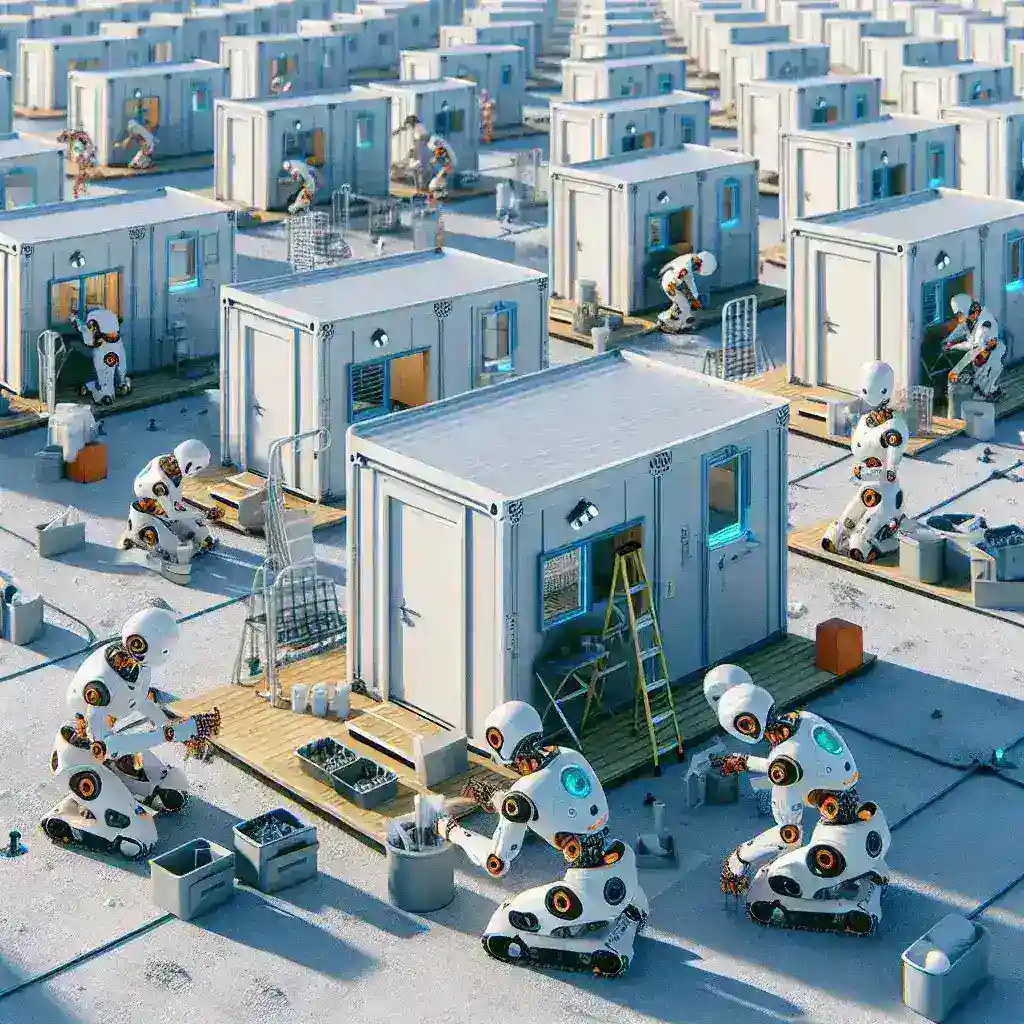
AI robotics play a transformative role in the design and construction of these modular shelters. Here’s how:
- Design Optimization: AI algorithms analyze environmental data to create shelter designs that are not only structurally sound but also energy-efficient. This ensures that the shelters are suitable for various climates and can withstand different weather conditions.
- Automated Construction: Robotics can automate many of the labor-intensive processes involved in constructing these shelters. This not only speeds up construction times but also reduces human error, leading to higher quality shelters.
- Resource Efficiency: AI can help determine the most efficient use of materials, reducing waste and ensuring that resources are used in a sustainable manner. This is crucial in a world where resources can be scarce in disaster-struck areas.
- Rapid Deployment: With the help of robotics, modular shelters can be assembled quickly and efficiently. AI can coordinate logistics, ensuring that supplies are delivered to the right place at the right time.
Real-World Examples
Several organizations are already harnessing AI robotics to create modular shelters:
- ICON: This Austin-based construction technology company has developed 3D-printed homes that can be assembled in under 24 hours. Their technology is being used to provide housing for those affected by disasters.
- Airbnb’s OpenHomes: In collaboration with local governments, Airbnb has implemented programs that provide temporary housing for climate refugees, utilizing modular shelters as part of their offerings.
- UNHCR’s Innovation Program: The United Nations High Commissioner for Refugees is exploring the use of modular shelters enhanced by AI technology to improve living conditions for displaced populations.
The Future of AI Robotics in Disaster Relief
The potential for AI robotics in creating modular disaster shelters is immense. As technology advances, we can expect even more sophisticated solutions:
Innovations on the Horizon
Future developments could include:
- Self-Repairing Structures: AI could lead to the creation of materials that can repair themselves after being damaged, increasing the longevity and safety of shelters.
- Smart Shelters: Integration of IoT devices could allow shelters to monitor environmental conditions, ensuring that inhabitants are safe and comfortable.
- Adaptive Designs: AI could enable shelters to adapt to changing weather conditions in real-time, ensuring the safety of the inhabitants.
Challenges to Overcome
Despite the promising outcomes, challenges remain:
- High Initial Costs: The technology involved in AI robotics and modular construction can be expensive, potentially limiting accessibility for some communities.
- Regulatory Hurdles: Building codes and regulations may need to evolve to accommodate new construction technologies.
- Public Acceptance: Communities may be hesitant to embrace new technologies for disaster relief, requiring education and outreach.
Conclusion
The integration of AI robotics in creating modular disaster shelters presents a groundbreaking opportunity to address the urgent needs of climate refugees. As climate change continues to displace millions, it is imperative that we invest in innovative solutions that not only provide immediate relief but also offer sustainable, long-term housing solutions. By leveraging the power of technology, we can ensure that every climate refugee has a safe place to call home.
Call to Action
Now is the time for governments, NGOs, and private sectors to collaborate and invest in AI robotics for disaster relief. Together, we can pave the way for resilient communities and a more sustainable future for all.
Leave a Reply